
The Technical Case for Early ITR Filing: A Compliance Perspective for AY 2026-27
A Compliance Perspective for AY 2026-27 Most commentary on early tax filing focuses on convenience. This piece takes a narrower, more technical view: what the Income-tax Act itself does differently depending on when you file, and why an early...
ITR-4 Form Eligibility: Who Can and Cannot File ITR-4 Sugam?
Master the ITR-4 (Sugam): Eligibility, Rules, and Who Can File Filing income tax returns can feel overwhelming. Choosing the wrong form can lead to defective return notices from the Income Tax Department. If you are a small businessman, a...
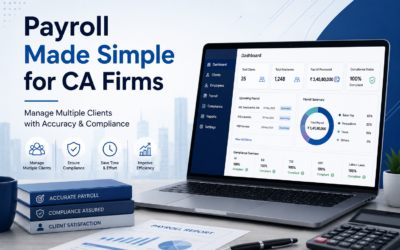
Payroll Management System for CA Firms Managing Multiple Clients
In today’s fast‑paced financial landscape, Chartered Accountant (CA) firms are no longer limited to bookkeeping and tax filing. They are increasingly becoming strategic partners for businesses, offering end‑to‑end financial solutions. One of the...
ITR-2 AY 2026-27: New Changes, Eligibility, Deadlines, and Filing Process
The Income Tax Department has notified ITR-2 for Assessment Year (AY) 2026-27, introducing important changes that taxpayers must be aware of. This form is applicable to individuals and Hindu Undivided Families (HUFs) who do not have income from...
Income Tax Act, 2025: Carry forward of losses from Income Tax Act, 1961!
📌 Introduction With the repeal of the Income Tax Act, 1961 and the commencement of the Income Tax Act, 2025 from April 1, 2026, taxpayers have raised concerns about the treatment of past losses and deductions. Losses are crucial in tax planning, as...
ITR 1-4 Changes AY 2026-27
ITR 1–4 Updates for FY 2025-26 (AY 2026-27): Key Changes for Individuals & HUFs The Central Board of Direct Taxes (CBDT) has rolled out significant revisions to the Income Tax Return (ITR) forms for AY 2026-27. These updates go beyond cosmetic...
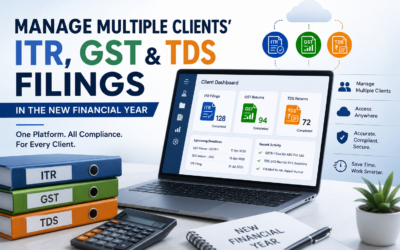
Managing Multiple Clients’ ITR, GST, and TDS Filings in the New Financial Year Using Sinewave Cloud
With the onset of the new fiscal year, chartered accountants and other tax professionals are once again faced with the task of filing ITR, GST, and TDS for several clients at once. As the compliance deadline gets tougher each year and penalties for...

What Are the Benefits of Filing ITR on Time in India?
Benefits of Filing Income Tax Returns on Time Filing your Income Tax Return (ITR) on time is more than just a legal responsibility — it is an important financial habit that can benefit individuals, businesses, and professionals in several ways....
Income Tax- New Forms applicable from 01st April, 2026!
IntroductionThe shift from the Income Tax Act, 1961 to the Income Tax Act, 2026 has introduced major structural and procedural updates, including renumbering, consolidation, and streamlining of statutory forms. While the essence of compliance;...
TDS Rates for FY 2026-27
✨ Introduction Tax Deducted at Source (TDS) is a key compliance mechanism under the Income Tax Act, ensuring tax collection at the point of income generation. For FY 2026-27 (Tax Year 2026-27), effective from 1st April 2026, the Income Tax Act 2025...
CBDT Sets 31st March 2026 as Last Date for TDS/TCS Correction Statements (FY 2018–19 to 2023–24)
Introduction Tax compliance in India has undergone significant transformation over the past decade, with digitization and stricter monitoring ensuring greater transparency in reporting. One of the most critical aspects of compliance is the accurate...

Quarter-End Compliance Checklist for Businesses | GST & TDS
Quarter-end is not just about closing books—it’s about ensuring your business stays compliant, penalty-free, and audit-ready. Whether you're a growing startup or an established enterprise, missing even a small compliance task can lead to financial...